








Credit cards to suit student budgets
Before we get into the details, here is an overview of student credit cards that are cheaper to keep in your back pocket and have simple features that keep costs down. Remember to always check the card’s terms before applying.
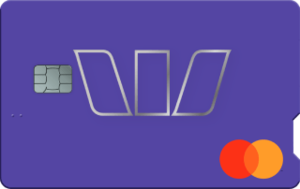
The Westpac Low Rate card has an interest rate of 13.74% p.a. and a low annual fee of $59 per year. The annual fee works out to less than $5 a month each year, which is good for student wallets (although it’s payable as a lump sum). You can also earn cashback and rewards through Westpac’s ShopBack program. A minimum income of $30,000 is required.
Similarly, the ANZ Low Rate card has a 13.74% p.a. interest rate and a $58 annual fee. However, this card often includes an introductory offer, such as a waived annual fee the first year, or $400 cashback if you meet the criteria. You can earn rewards and discounts through ANZ Rewards, which can be a nice perk for a student. ANZ doesn’t specify a minimum income for eligibility.
The Latitude Low Rate Mastercard strikes a nice balance between low-cost and having a few perks. Its interest rate is low at 13.99% p.a., and its annual fee is $69 per year. It often comes with a benefit like no annual fee the first year, or no interest for a certain period of time. However, be careful of interest-free promotions because they may encourage overspending. This card doesn’t list a minimum income requirement.
The Westpac Lite credit card has one of the lowest interest rates in town at 9.9% p.a., but it does have a slightly higher fee at $9 per month ($108 each year). The benefit is that you won’t pay foreign exchange fees on purchases you make overseas, either online or in person. It also has no late fees, although we’d advise just not being late with repayments if you can help it. The minimum income required is $30,000.
These rates and fees are correct at 17 October, 2025
What is a student credit card?
Let’s unpack: a student credit card suits students because it typically offers a small annual fee and a lower credit limit so you can’t overspend too much.
It’s often easier for students to be approved for low-cost credit cards since they’re low-risk for banks. They're also a good starting point for first-time cardholders, and can teach you how to safely and responsibly use credit cards.
What does “low-cost” credit card mean?
A low-cost card usually means it has:
- A low or no annual fee, which might look like $59 a year instead of $150+.
- A low interest rate, such as 13.99% p.a. instead of 23.99% p.a.)
- No flashy extras like rewards or travel perks
These cards are great for students because they’re simple and inexpensive to maintain. They’re great for learning how credit works without high risk.
Would a student credit card be right for you?
First, ask yourself why you want a credit card. Is it to kick-start your credit profile? Because you want an emergency fund? Or because you need more cash every day?
Credit cards used to cover daily expenses can be a slippery slope for debt. It’s a much better idea to spend less than your income, and only use your card to show banks how responsible you are financially.
So, which kind of student are you?
| If you… | Then… |
|---|---|
| Want to build your credit score for the future | ✔ Consider a low-cost student card and pay it off monthly |
| Need money for everyday expenses | ✖ Rethink it — you might end up in debt |
| Want a safety net for emergencies | ✔ Keep the card for backup only, and repay it quickly |
| Want to earn rewards | ✖ Focus on learning good habits first and focus on rewards later |
| Aren’t sure how interest works | 💬 Read up before applying. You need to know how to use a credit card responsibly first. |
If you’re going to apply, it’s important to check the eligibility criteria. You might need to meet these requirements:
- You may need to be a student. You may need to be enrolled in tertiary education or be a full-time student. We'll include that information in the card review under Eligibility Requirements. However, most cards simply require that you have proof of some income.
- You’ll need to meet eligibility criteria. You'll likely need to be an Australian resident aged 18 or over. Credit cards today rarely specify minimum incomes, but low-fee, lost-interest cards usually cater to the low-income market.
- You understand how credit cards work. Your first credit card is always going to be a learning experience, but you should still understand the basics before you apply. That includes how interest-free days work, spending only what you can pay back, and paying off your balance.
How can a credit card help you?
- Access to credit. Credit means you can buy stuff now on "borrowed money" and pay it back later. But, it’s important to only spend what you can afford to pay back, or you’ll end up paying interest endlessly.
- Access to features. A student card might be basic, but can have handy extras like cashback or insurance that protects you from fraud.
- Understand how credit works. A student card is a good way to figure out how credit works before jumping into a more advanced card with rewards programs, higher fees and travel perks.
- Help build your credit. Building a credit score by being responsible with a credit card can help you with other lines of credit down the track, like personal loans or home loans.
How a credit card builds your credit score
When you make a purchase on your credit card and pay it off on time, you’ll build a credit history that shows lenders you can be trusted with borrowed money.
Good habit: Use your card to pay for something small each month (like your phone plan or a small shop) and pay it off in full.
Result: You start building a credit history that helps you get approved later for a car loan, rental, or home loan.
For example, let’s say Sophie gets a low-cost credit card with a $3000 limit. She used it to pay for her train pass and coffees, but pays it off each month. After a year, she’s built up a solid credit history that helps her get approved for a car loan, so she doesn’t need the train anymore.
Our best tips: making a student credit card work for you
Making your student credit card work for you is the key to your success with debt, both now and in the future. Here are some tips to keep in mind both when you are applying for and using your card.
TIP 1. Understand what your card provider expects of you before you apply. This means checking the eligibility requirements on the card, and making sure you meet every single one of them. Reading the small print will help you understand how the card works, while also helping you to get the most out of it.
TIP 2. Don’t think of your credit limit as a challenge. Your card provider will set a credit limit for you based on the card limit and your income. That might only be $1000, which is a good starting point. But, just because you can spend up to that limit, doesn’t mean you should. Only use your card to pay for stuff you know you can pay back, and avoid stacking up debt on your card that will become unmanageable.
TIP 3. Always pay off your balance at the end of each month. While it can be tempting to only pay the minimum payment, doing so will mean you pay more in interest, while you stay in debt longer. When you clear your balance each month (balance is the amount you owe), you can stay on top of your spending, while taking advantage of features such as interest-free days on your purchases.
TIP 4. Avoid cash advances. Your credit card does not work in the same way as a debit card. Withdrawing money on your student credit card will mean paying more in fees and interest, with interest accruing from day one.
How to avoid interest forever
Set up an automatic payment for the full amount you owe each month, so you don’t have to remember to make the payment.
Pros and cons of student credit cards
Pros
- Low or no annual fees, meaning your only potential expense is interest payments
- Low interest rates, meaning you don’t pay as much as other credit cards
- Low credit limits, reducing the opportunity to overspend and get into debt
- Basic card, keeping it simple
- Opportunity to build credit
- Access to credit, even when you have no credit history
Cons
- Fewer features or benefits than other more expensive cards
- Typically no rewards program, or a less lucrative one than other cards
- Introductory offers may entice inexperienced cardholders, who then get into trouble after the offer ends
Top tips for using your student credit card
- Choose the right card: Compare the options using CreditCard.com.au, to find the card that best suits your needs. Keep in mind annual fees and interest, and don’t be swayed by more expensive cards offering extras – especially rewards – that you don’t need.
- Create a budget: Look at how much you have coming in, and how much you need to spend. Then create a budget that allows you to spend within your means.
- Set a spending limit: Once you have created a budget, you will know exactly how much you can spend each month. Set a spending limit on your credit – and don’t go over it. Some card providers allow you to set spending limits on your card to help you if your willpower is low.
- Use your card only for the essentials: When you first start using your credit card, you may want to keep it for essentials only. This should make it easier to pay off at the end of the month.
- Keep track of your spending: It can be all too easy to keep on spending on your card, thinking you’ll deal with the fallout later. Sometimes you don’t want to know how much you’ve spent because it’s a bit too scary to deal with. However, if you make a habit of keeping track of your card spending – either online or via the card’s app – it may help prevent you from overspending.
- Clear your balance each month: The best way to deal with a credit card is to pay it all off each month. This can help you to keep on top of your spending, while also avoiding interest accruing on your balance.
- Pay as you go: You don’t have to wait until your statement arrives to pay off your credit card. You can transfer money onto your card to pay down your balance whenever you like. This can be a great way to avoid spending more than you can afford to pay back.
- Create an emergency fund: While credit cards are great for emergencies, what happens if you can’t afford to pay off that emergency purchase afterwards? Instead of relying on your card as backup – and paying too much in interest if you can’t pay it off right away – work on creating an emergency fund instead.
- Don’t get in over your head: When you’re new to credit – or even when you’ve had a credit card for years – it can be amazingly easy to get in over your head. Avoid overspending, and create good habits to clear your balance in full each month. And, if you get into trouble, seek help straight away.
A quick summary of student credit cards
| Big Takeaway | |
|---|---|
| Best cards to look at | Westpac Low Rate, Westpac Lite, ANZ Low Rate, Latitude Low Rate – all have low interest and modest fees. |
| Ideal for | Students or first-time cardholders who want to build credit without paying high fees or interest. |
| Main costs to watch | Annual fee (usually $59–$108) and interest if you don’t repay in full each month. |
| How to avoid interest | Pay off your full balance each month, or even pay as you go. |
| How to build credit | Use your card regularly for small purchases, pay on time, and keep your balance low. |
| Biggest mistakes to avoid | Spending up to your limit, withdrawing cash, or ignoring your statement balance. |
| Best habit to start now | Set up automatic payments for the full amount every month — it protects your credit and saves money. |
BNPL vs student credit card: which one should you actually get?
Buy Now Pay Later services (Afterpay, Zip, Klarna) are the default first credit product for most Australian students today — but they carry real risks that a well-used credit card doesn't. Here's how they compare on the things that actually matter for someone starting out.
| Factor | BNPL (Afterpay/Zip) | Student credit card |
|---|---|---|
| Builds credit history | No — BNPL is not reported to credit bureaus | Yes — every on-time payment builds your Equifax/illion file |
| Late payment impact | Late fees ($10–$15), account frozen — no credit score damage | Missed payment reported after 60 days — stays on file 5 years |
| Interest cost if you can't pay in full | No interest — but late fees stack up fast | 13.74–20% p.a. on unpaid balance |
| Accepted everywhere | Only at BNPL-enabled merchants | Visa/Mastercard accepted globally, online and in-store |
| Income requirement | None for most BNPL providers | Typically $15,000–$30,000 p.a. (part-time or casual counts) |
| Value of using it well | Zero long-term benefit — no credit file improvement | Strong credit file by graduation, easier loan/rental approvals |
The bottom line for students: BNPL is lower-risk in the short term (no credit score damage from late fees, no interest charges). A credit card is higher-reward in the long term — if you pay it off monthly, you'll graduate with a credit history that BNPL users simply don't have. That difference shows up when you apply for a car loan, rental apartment, or home loan in your mid-20s. The ideal approach for most students: use a low-rate credit card for recurring bills you'll always pay on time, and avoid carrying a balance at all costs.
How your first credit card affects your credit score in Australia
Australia uses three main credit bureaus — Equifax, Experian, and illion. When you apply for your first credit card, a new credit file is created for you. This file is what lenders, landlords, and telcos check when you apply for anything on credit. Here's what actually moves the needle as a student cardholder.
What builds your score
On-time payments are the single biggest factor. Under Australia's Comprehensive Credit Reporting (CCR) system, introduced in 2018, banks report both positive and negative payment history. Every month you pay at least the minimum on time adds a positive mark. After 12–24 months of clean payments, most students move from "thin file" (no score) to a score in the 600–700 range on Equifax's 0–1,200 scale — enough to qualify for a car loan or rental apartment without a guarantor.
What damages your score — and for how long
A missed payment is only reported to credit bureaus after it is 60 days overdue — so a single forgotten payment that you catch within two months causes no score damage. However, once reported, a default stays on your credit file for 5 years. A serious credit infringement (repeated non-payment) stays for 7 years. At 19, a 5-year mark follows you through your early 20s — exactly when you're most likely to need credit for a car, lease, or home deposit.
What doesn't affect your score (but people think it does)
Checking your own credit score does not affect it — only hard enquiries from lenders count. Applying for multiple cards in a short window does create multiple enquiries, which can lower your score. As a student, apply for one card and use it well rather than applying to several providers at once.
ASIC guidance: Under the National Consumer Credit Protection Act, lenders must assess whether a credit product is "not unsuitable" for you — meaning they're required to consider your income and expenses, not just your age. A student on $20,000/year from part-time work can legitimately hold a credit card; the legal obligation sits with the lender to set a limit that's manageable for that income level.
What carrying a $500 balance actually costs a student
The most dangerous habit for a first-time cardholder is carrying a partial balance — paying the minimum each month and letting interest accumulate. Here's what that looks like in real numbers for the most common student card interest rates.
| Card type | Rate | Monthly interest on $500 | Time to pay off at min. payment | Total interest paid |
|---|---|---|---|---|
| Low-rate student card | 13.74% p.a. | $5.73 | ~2.5 years | ~$89 |
| Standard credit card | 19.99% p.a. | $8.33 | ~3 years | ~$152 |
| High-rate rewards card | 20.99% p.a. | $8.75 | ~3.5 years | ~$175 |
These calculations assume a 2% minimum payment each month ($10 minimum). The difference between a low-rate card and a standard card on a $500 balance is roughly $63 in total interest — not life-changing. But the real risk isn't the rate; it's the habit. A student who carries $500 in month one often carries $1,000 by month six. At $2,000 on a 20% card, minimum payments stretch to 6+ years and total interest exceeds $600. The most effective protection is a direct debit set to pay the full balance monthly — most banks offer this as a free account setting.
Questions students actually ask before applying
These reflect the real questions we see from first-time applicants — the things comparison pages rarely address directly.
"I work part-time at a café, about 15 hours a week. Does that count as income for a credit card application?"— Reader question, recurring
Yes — casual and part-time income counts for most credit card applications. Banks assess your ability to repay based on all regular income, including part-time wages, not just full-time employment. At 15 hours/week on the minimum wage (around $24.95/hr as of July 2025), you'd earn approximately $19,500/year — enough to satisfy the income requirements of most low-rate cards. You'll need to provide recent payslips or bank statements showing regular deposits. Centrelink payments (Youth Allowance, Austudy) can also be included as income by some lenders, though not all — check the PDS or call the bank before applying.
"My parents said I can be added to their credit card as a supplementary holder. Is that better than getting my own card as a student?"— Reader question, recurring
For building your own credit history, your own card wins — but a supplementary card is fine as a short-term spending tool. As a supplementary cardholder, you get the convenience of a card but the account appears on the primary cardholder's credit file, not yours. Your own payment behaviour isn't separately recorded. If your goal is to have a strong credit file by the time you apply for a car loan or rental at 22–24, you need an account in your own name. The best approach if your parents are willing: be added as a supplementary holder for immediate access, and simultaneously apply for a low-limit card in your own name ($500–$1,000 limit) that you pay off monthly.
"I applied for a credit card and got declined. Will this affect my credit score? Can I apply somewhere else straight away?"— Reader question, recurring
The declined application itself doesn't hurt your score — but applying again immediately can. Each credit application creates a "hard enquiry" on your file that lenders can see. Multiple enquiries in a short window (30–60 days) signal credit-seeking behaviour and can lower your score by 5–20 points per enquiry on Equifax's 1,200-point scale. If you're declined, wait 3–6 months before applying again — and in the meantime, check your credit file for free via Equifax, Experian, or illion to understand why. The most common reasons for student rejections are insufficient income or no credit history, both of which are fixable with time rather than more applications.








Nelly abdi
7 July 2024Pauline
10 July 2024grace
23 December 2022Pauline
3 January 2023Sajnee
16 September 2022Pauline
19 September 2022Xin Cheng
1 February 2021Roland
2 February 2021Kuan Hor Kwa
4 March 2020Roland
5 March 2020